

Inhabiting a Curse
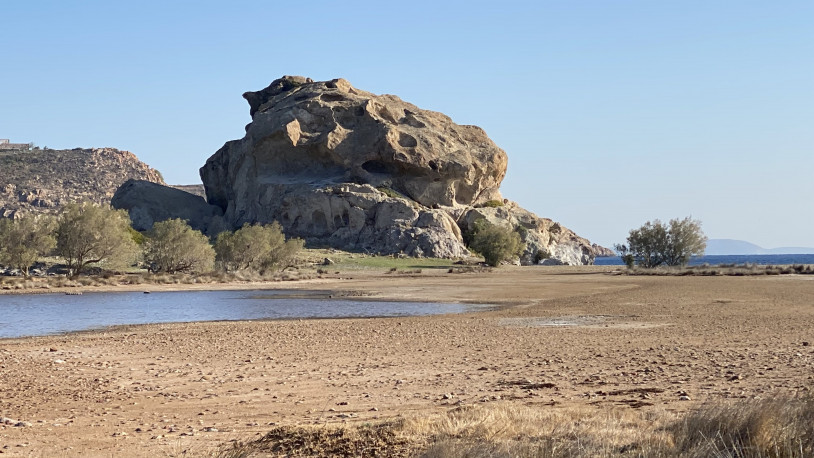
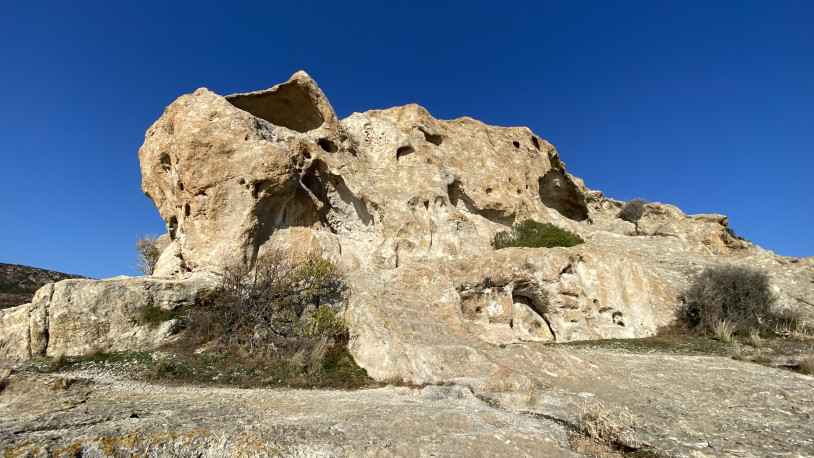
I was told that a hermit had carved the hollows in the rock known as Petra Kalikatsou. In the bay of Grikos, just a few steps from the sea, this enormous mass of volcanic rock is pierced by openings of widely varying sizes.
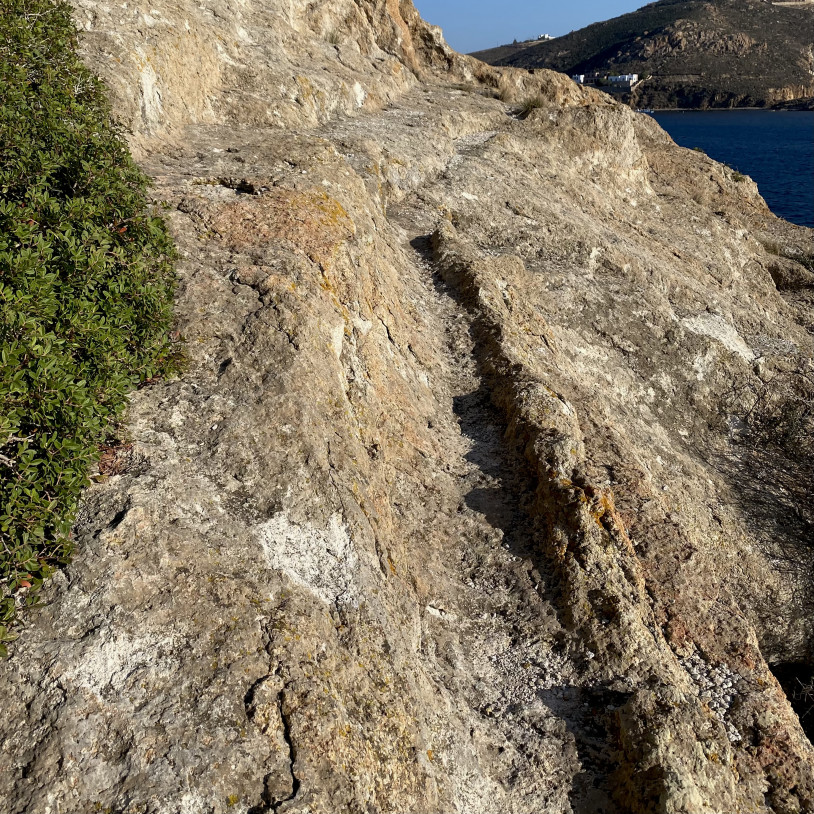
Some are deep enough to shelter a person; others are barely larger than a fist. Niches, ledges and steps cut directly into the stone are scattered across its flanks, while the higher cavities seem accessible only by following a succession of small footholds.
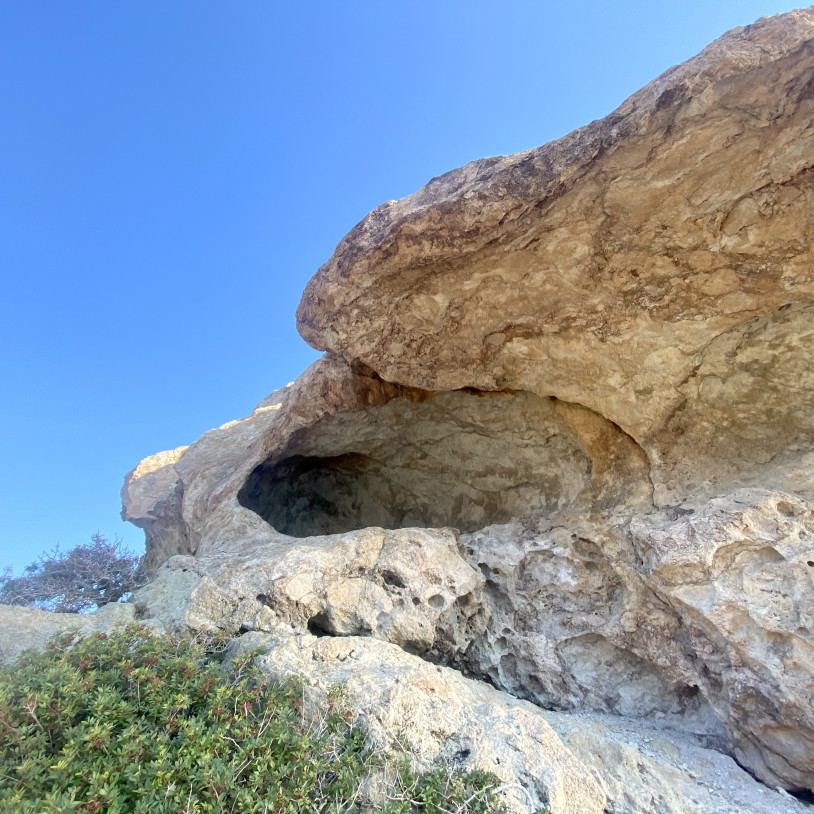
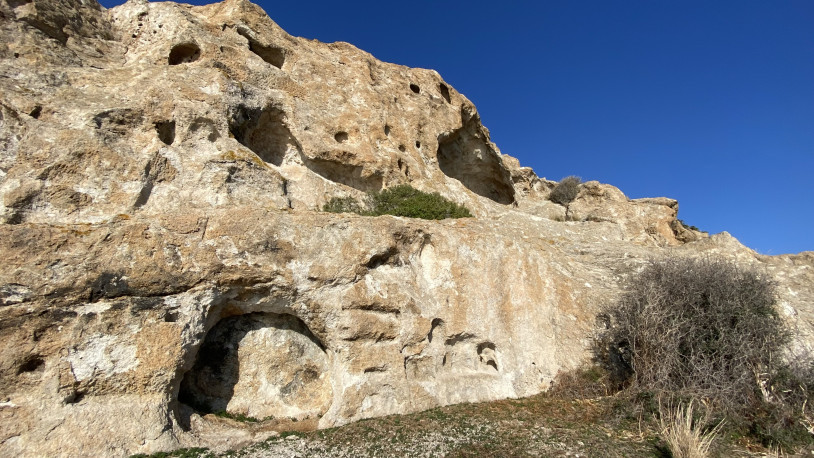
The hermit's name has not survived. Local accounts also speak of several ascetics who inhabited the Petra, altering the rock to create places of shelter and prayer. The steps, a cistern and small recesses for charcoal and candles are attributed to them. Yet the rock had been frequented, and probably worked, many centuries before the monks arrived.
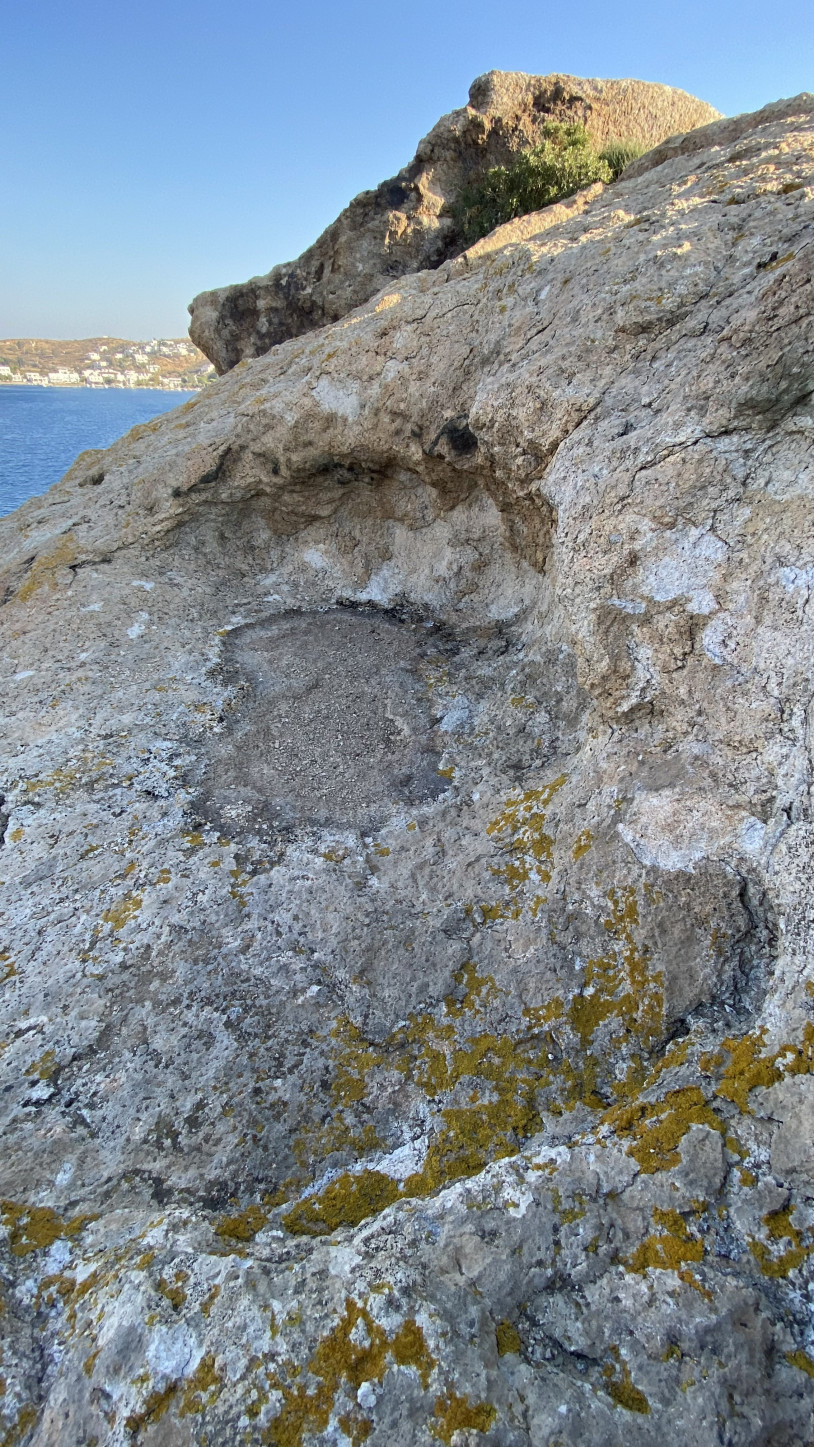
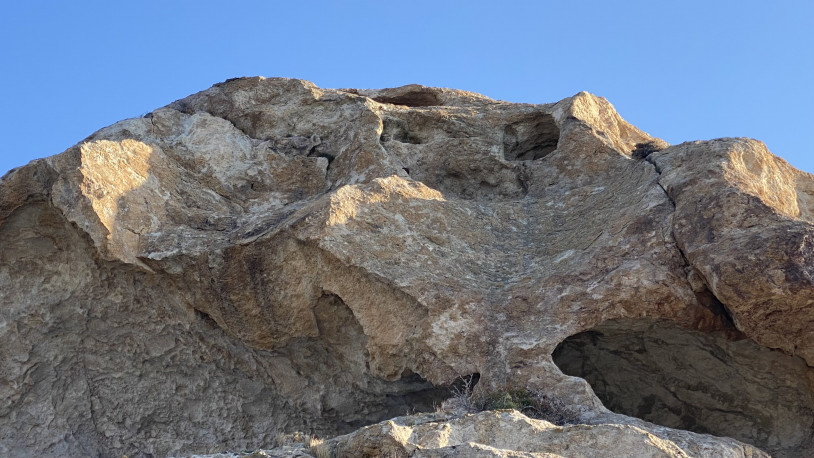
The steps follow the irregularities of the surface, at times becoming almost indistinguishable from the natural projections of the stone.
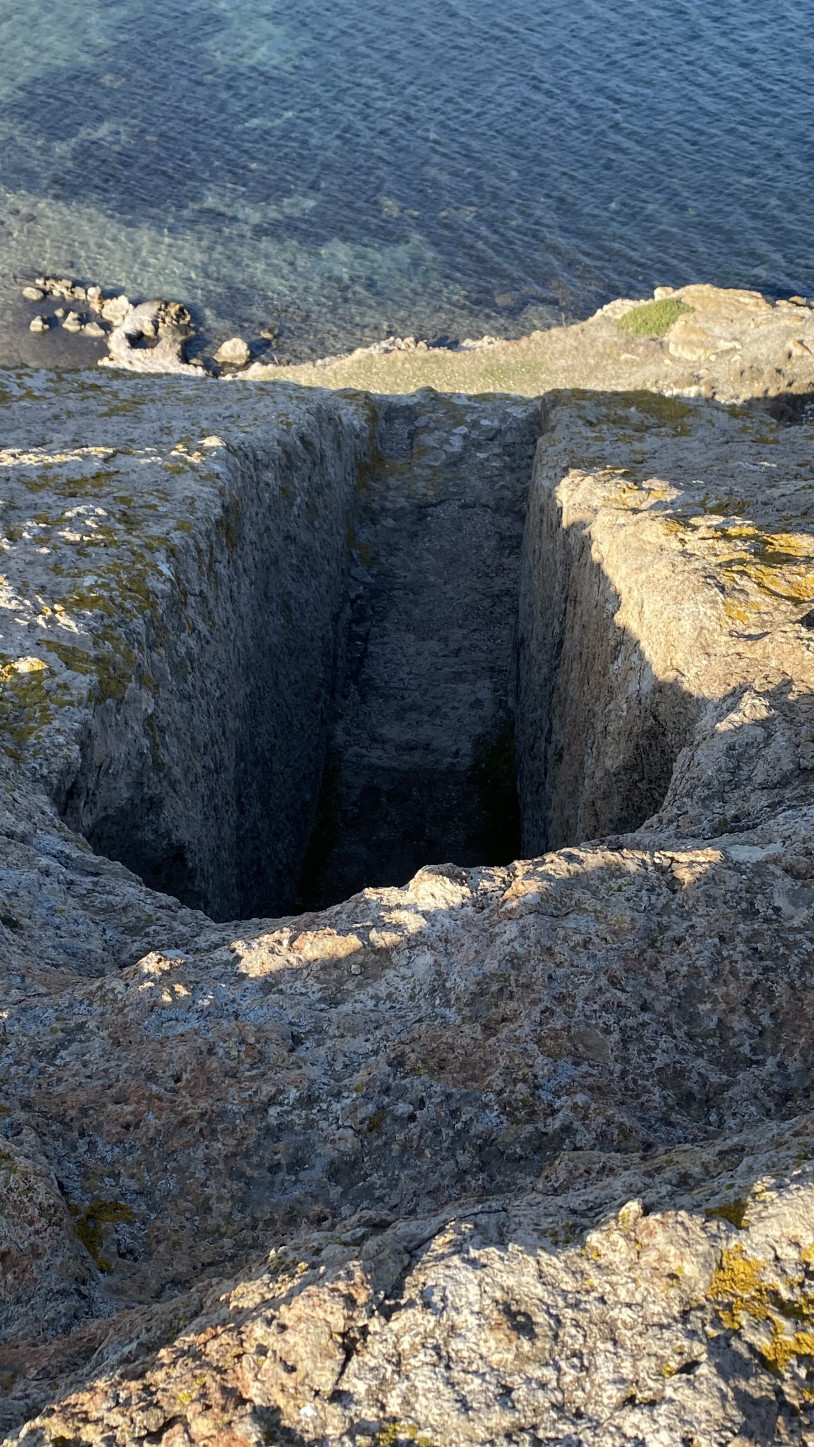
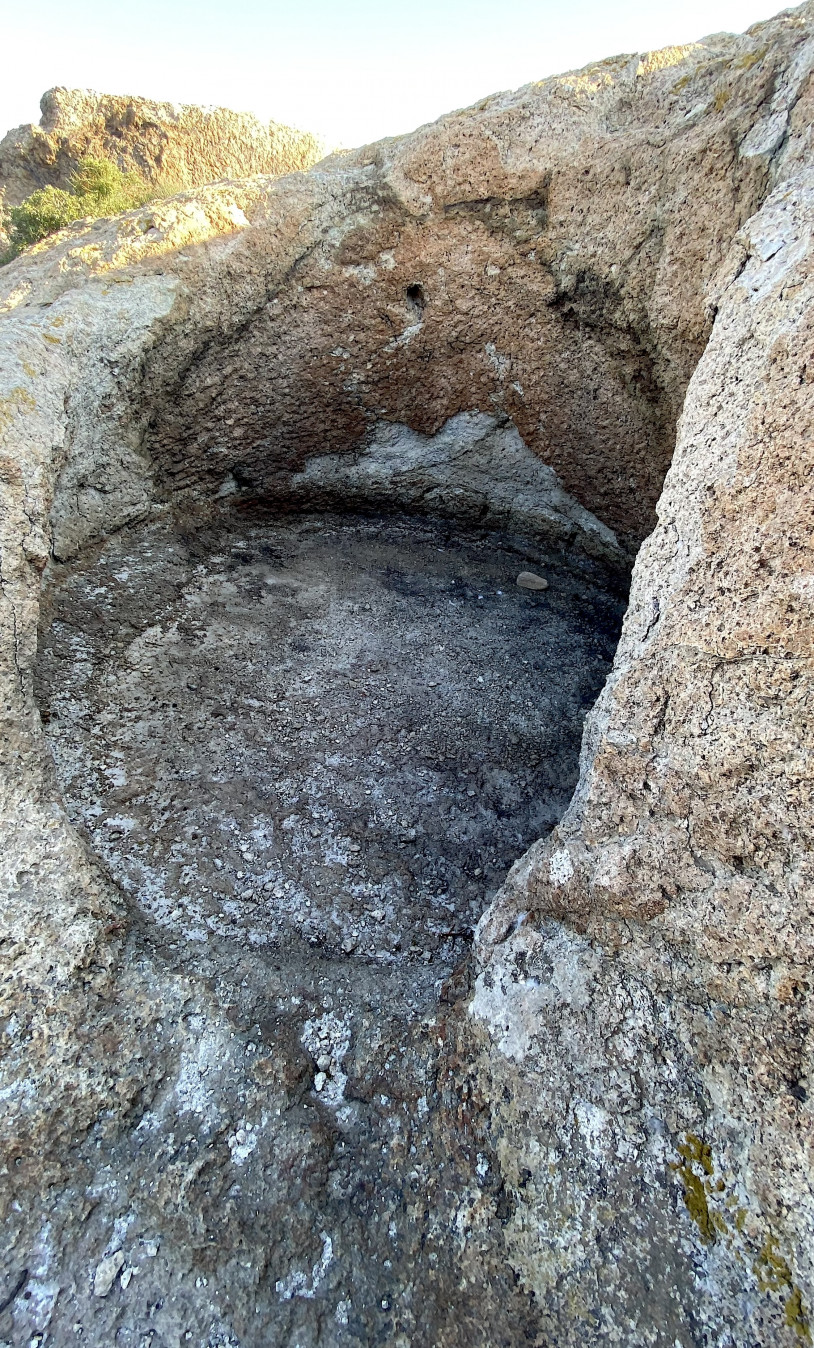
They lead towards the upper part of the rock, where a cistern opens between nearly vertical walls. Water still collects at the bottom, and a dark band marks its inner surface. According to a local account, channels cut into the stone directed rainwater into the reservoir.
Open to the sky, the cistern would have allowed the ascetics to store water without constantly having to descend to the shore.
The recesses intended for charcoal and candles are more difficult to identify. Local accounts describe their purpose without specifying their exact location. Numerous small hollows remain in the rock face, some barely perceptible, others extending deep into the stone. In places they lie one above another, separated by thin partitions of rock. Charcoal would have had to be carried up and kept dry; candles, sheltered from the wind. These modest objects suggest the practical demands of living somewhere without the walls, doors or roof of a dwelling.
The Monastery of Saint John the Theologian dates the hermitage of the Petra to the eleventh century, placing it among the oldest on Patmos. Such places of retreat were known as kathismata and could remain under the monastery's authority. Christodoulos, who had been granted the island by Emperor Alexios I Komnenos in 1088, had made provision in the monastic rule for monks to withdraw from communal life with the abbot's consent. A later historical account also links the hermitage of the Petra to a codicil Christodoulos added to his will in 1093, shortly before his death on Euboea, where he had taken refuge from pirate raids.
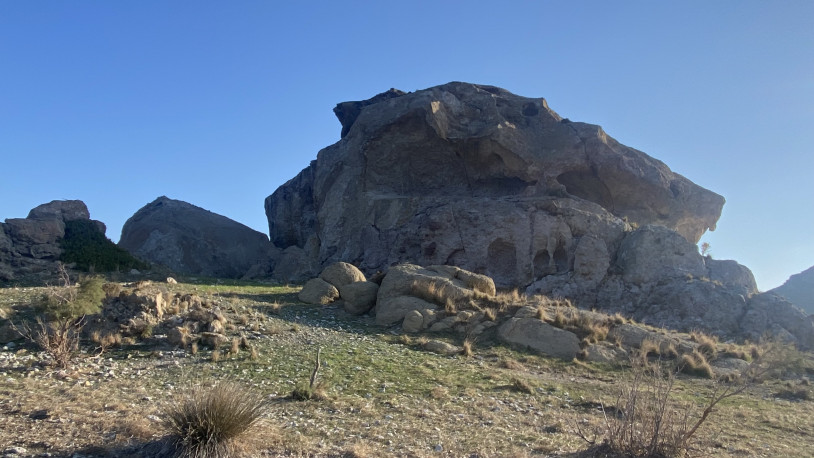
The identities of the monks who inhabited the rock are unknown, as is the purpose of each cavity: which were used for sleeping and which for storing possessions. Some may have been inherited from much earlier periods of occupation. Pottery fragments and obsidian tools originating from Milos, dating to the Late Bronze Age, have been found in the area. Certain worked features were interpreted as possible statue bases, burial places or hollows intended to receive offerings. These discoveries gave rise to the hypothesis that the Petra had once been an open-air sanctuary, perhaps dedicated to Aphrodite.
Anna Marava-Chatzinikolaou proposed Artemis instead, drawing on an ancient inscription that celebrated Patmos as the island of Leto's daughter and spoke of dwellings in the depths of the sea. She wondered whether these dwellings might correspond to the cavities carved into the rock near its base. It remains unclear which openings, if any, belonged to the proposed sanctuary and which were subsequently altered by the hermits.
Another story told on the island gives the rock an entirely different origin.
A girl had just received Holy Communion when she decided to go swimming in the bay. Her mother forbade her, but the girl persisted. Finally, exasperated by her daughter's disobedience, the woman told her to go, then, and turn to stone. The girl entered the water, and the curse came true. The great rock of Kalikatsou is said to be her petrified body.
The rock also shares its name with a seabird, the European shag, known as kalikatsou on some Greek islands. The bird frequents rocky coastlines and dives underwater to catch fish. A different explanation for the rock's shape, recalled by the local researcher Despoina Vakratsi, suggested that a lightning strike had altered its outline. This remains a conjecture passed down through local accounts, rather than a geologically established event.
According to these different stories, the rock was once a girl's body or a formation reshaped by lightning; archaeological interpretations suggest a place of worship subsequently converted into a hermitage. Its cavities have been attributed to interventions from different periods, although their precise chronology remains uncertain.
At the foot of the Petra, close to the sea, a historical account published in 1993 describes the remains of a small church, with part of its foundations now underwater and a stone thought to have supported the altar table. Traces of an ancient landing place have also been reported nearby. The relationship between these structures and the spaces occupied by the ascetics remains uncertain.
Another tradition holds that the Petra could be reached without crossing the bay or climbing the steps.
A long underground passage is said to have led from the Monastery of Saint John in Chora towards Grikos. During pirate raids, the monks supposedly used it to carry the monastery's relics and valuables to safety. Among them was the head of Saint Thomas the Apostle, which, according to the story, was transported through the passage to the coast, where a boat could collect it from a sheltered landing place.
The story speaks of a hidden door within the monastery but gives no indication of its location. No archaeological evidence of the passage has been found, nor has its exit near the Petra ever been identified.